How Water Works Here
Reservoirs, a river, a tunnel, imported water and a desalination plant: the pieces behind every Santa Barbara tap.
SANTA BARBARA: Turn on a tap in Santa Barbara and the water behind it could have fallen as rain in the Santa Ynez Valley, traveled down the State Water Project from far to the north, or come out of the ocean through a pipe. The city runs a diversified portfolio of supplies, and it is worth knowing the pieces.
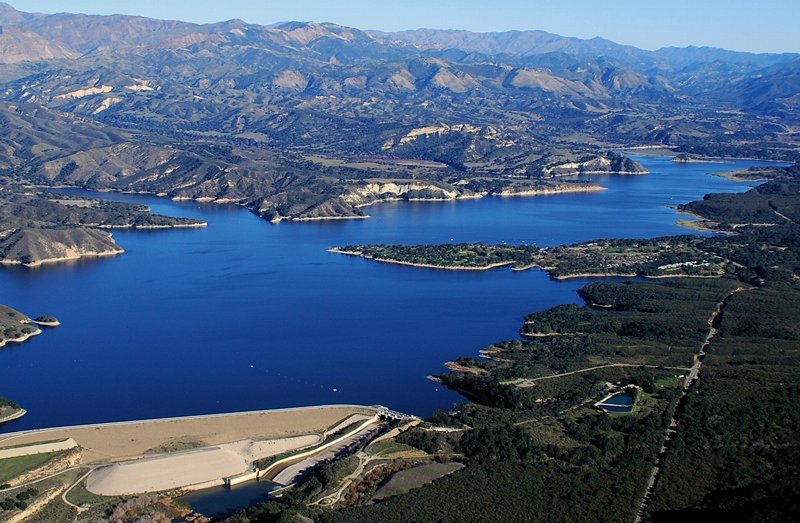
The best-known piece is Lake Cachuma, on the Santa Ynez River along Highway 154, held back by Bradbury Dam, which the U.S. Bureau of Reclamation built in 1953. The Cachuma Project delivers water to the South Coast, and the lake is the reason the words water and politics are rarely far apart in Santa Barbara County. One quirk worth knowing: there is no swimming in Lake Cachuma. Body contact with the reservoir has been restricted since the 1950s, when a county ordinance barred any boat use that would cause contact with the water.
The other local surface pieces are Gibraltar Reservoir, the Mission Tunnel that carries water across the mountains, and Devil's Canyon Creek, along with 300 acre-feet a year of Jameson Reservoir yield the city receives under an agreement dating to the 1930 construction of Juncal Dam, which the Montecito Water District built on city-owned land. Gibraltar's story is a local lesson in siltation: reservoirs behind dams slowly fill with sediment, which is part of why the city cannot rely on its oldest reservoir alone.
Below the surface, the portfolio draws on the Foothill and Santa Barbara groundwater basins. Beyond the local watershed, it draws on recycled water for non-drinking uses, water imported through the State Water Project, and conservation, which the city counts as a supply in its own right in its annual water supply management report.
The newest piece of the portfolio is also the oldest idea. The Charles E. Meyer Desalination Plant was built in 1991 during a drought, ran briefly, and was then placed in long-term standby when the drought broke. On July 21, 2015, the City Council voted unanimously to reactivate it, and desalinated water has been flowing into the system since May 2017. The plant normally produces 3,125 acre-feet per year, and its permits allow up to 10,000 acre-feet per year.
At the tap, the city's drinking water met or exceeded state and federal standards in the city's 2022 water quality report. The Public Works Water Resources Division runs the system, and SantaBarbaraCA.gov/Water is the starting point for billing and quality reports. The mix of sources changes year to year with rainfall, but the structure of the portfolio does not, which is the point of building one.
None to date. The Tribune corrects errors promptly and transparently. Read our corrections policy.